Introduction
A facilities manager at a midsize high school places an order for "durable sports netting" to replace worn backstops across three baseball diamonds. The supplier ships standard nylon netting at a competitive price. Eighteen months later, the nets show significant fraying along sun-exposed edges, holes developing in high-impact zones, and visible sagging after rainstorms. The cost-effective decision turned into a full replacement — along with unplanned budget allocation, installation downtime, and real safety concerns.
This scenario repeats itself across schools, parks departments, and sports complexes nationwide. The root problem is rarely material quality — it's a mismatch between the net material and the installation environment.
Indoor facilities eliminate UV exposure and moisture fluctuations, allowing certain materials to perform well for years. Outdoor installations require UV resistance, water repellency, and structural stability across temperature extremes. Using the wrong material for either setting accelerates degradation, drives up maintenance costs, and shortens replacement cycles.
This guide identifies the main sports net materials, explains what makes each suitable or unsuitable for specific environments, and shows how to match the right material to your application.
Key Takeaways
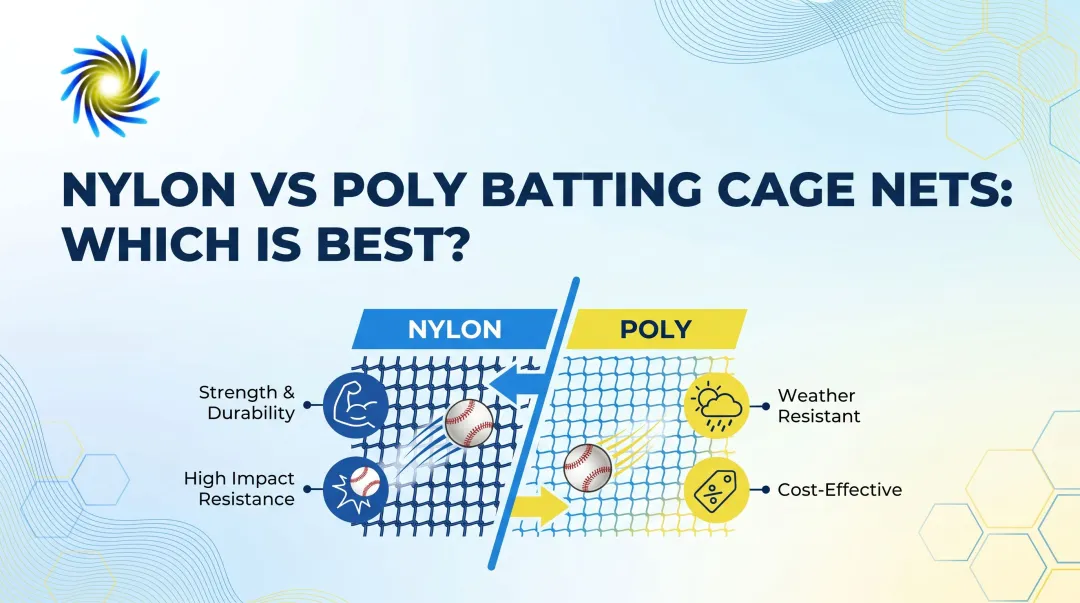
- Nylon dominates indoors: superior break strength and abrasion resistance, but degrades quickly with UV and moisture exposure
- HDPE is the outdoor standard—UV inhibitors built in, zero water absorption, and a lifespan of 10-15 years vs. 5-7 for treated nylon
- Treated nylon (latex or varnish dip) bridges the gap for mixed environments but carries a higher upfront cost
- Material choice directly drives replacement frequency, maintenance burden, and player safety
- Start with environment, then sport type—no single material wins across all applications
Indoor vs. Outdoor Sports Net Materials: Quick Comparison
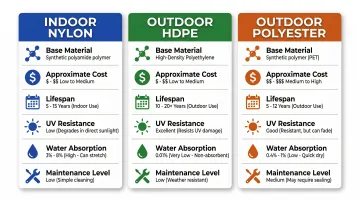
Choosing the wrong net material for your environment is one of the most common—and avoidable—reasons nets fail early. The five dimensions below give you a direct comparison so you can match material to application before you buy.
Composition
Indoor materials center on nylon (polyamide) for maximum tensile strength and elastic recovery—properties that matter most when nets absorb repeated high-velocity impacts in controlled climates. Outdoor materials prioritize HDPE or polyester with UV inhibitors embedded during manufacturing and natural water repellency to withstand sun, rain, and temperature swings.
Cost
Nylon typically costs around $2.00 per square foot, while HDPE runs approximately $1.50 per square foot. Treated nylon variants—latex-dipped or varnish-coated—command premium pricing but extend outdoor service life. HDPE delivers the lowest cost per year outdoors due to longer replacement cycles.
Durability / Lifespan
Indoor nylon nets can serve for years without degradation when UV and moisture exposure are eliminated. Outdoor nylon without treatment deteriorates rapidly—losing up to 20% breaking strength annually from UV exposure. HDPE maintains consistent performance outdoors for 10–15 years because it doesn't absorb water and includes extrusion-embedded UV stabilizers.
Environmental Resistance
Nylon requires surface coatings to resist moisture and UV damage. HDPE has UV inhibitors (typically 2–3% carbon black) mixed into the polymer during fiber extrusion, providing protection throughout the material's cross-section. Polyester offers moderate UV and abrasion resistance without additional treatment but absorbs minimal water (0.4% vs. nylon's 2.5%).
Maintenance Requirements
Indoor nylon nets need minimal upkeep in climate-controlled spaces. Outdoor nets—regardless of material—require seasonal inspection, cleaning to remove debris, and proper off-season storage when possible to maximize structural integrity and service life.
| Dimension | Indoor Nylon | Outdoor HDPE | Outdoor Polyester |
|---|---|---|---|
| Base material | Polyamide (nylon) | High-density polyethylene | Polyester fiber |
| Approx. cost | ~$2.00/sq ft | ~$1.50/sq ft | Moderate |
| Lifespan (typical) | Years (controlled climate) | 10–15 years | 5–10 years |
| UV resistance | Requires coating | Built-in (carbon black) | Moderate, no treatment needed |
| Water absorption | 2.5% | Near zero | 0.4% |
| Maintenance level | Low | Low–moderate | Low–moderate |
Indoor Sports Net Materials: Best Options for Controlled Environments
Indoor facilities neutralize the two primary forces that destroy outdoor netting: UV radiation and moisture exposure. While indoor lighting can emit trace UV, the intensity is minimal compared to direct sunlight. Stable humidity, no precipitation, and moderate temperature ranges allow materials with exceptional base strength but limited weather resistance to perform at their peak.
Nylon (polyamide) dominates indoor applications. This material delivers exceptional break strength — industrial-grade nylon fiber tests at 7–9.5 grams per denier — and 99% elastic recovery at 10% elongation. That elastic "stretch" property allows nylon to absorb the kinetic energy of fast-moving baseballs, softballs, and lacrosse balls without catastrophic failure. Commercial sports complexes and professional baseball teams favor nylon for indoor batting cages and training facilities because of this shock-absorption characteristic.
Nylon's Achilles heel is moisture absorption. Nylon absorbs up to 2.5% of its weight in water at equilibrium, causing fiber swelling and elongation. Wet nylon retains 85–90% of its dry breaking strength, representing a 10–15% immediate strength loss. This loss reverses once the fiber dries — but in outdoor environments with frequent rain or high humidity, nylon nets rarely dry completely.
UV degradation compounds the problem: unprotected nylon can lose 20% of breaking strength after one year of direct sun exposure and 30% after 500 hours, with both losses permanent. Indoors, where moisture and UV are controlled, these vulnerabilities disappear.
HDPE (high-density polyethylene) offers a lower-cost indoor alternative. While it lacks nylon's top-end tensile strength and elastic recovery, HDPE provides durable performance for lower-intensity indoor sports like volleyball nets or gymnasium dividers. Budget-conscious programs benefit from HDPE's cost advantage without sacrificing reliability in controlled environments.
Knotted vs. knotless construction matters for impact sports. Knotted netting is recommended for direct-impact applications — batting cages, lacrosse barriers — because reinforced knot intersections strengthen the mesh at high-stress points. Knotless netting offers cleaner sightlines and uniform mesh structure, suitable for backstop applications or areas where aesthetics matter, but repairs introduce visible knots into the uniform mesh.
Use Cases: Indoor Net Materials in Practice
Common indoor applications include:
- Batting cage tunnels in training academies and sports complexes
- Gymnasium dividers separating basketball courts or volleyball zones
- Indoor soccer barriers for futsal and training facilities
- Multipurpose training facility nets for combined baseball, softball, and lacrosse use
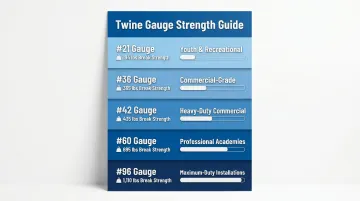
For all high-impact zones, nylon remains the top choice. Material gauge (twine thickness) matters as much as material type. Industry-standard gauges include:
- #21 gauge (194 lbs break strength): Youth development, recreational use
- #36 gauge (365 lbs break strength): Commercial-grade facilities
- #42 gauge (435 lbs break strength): Heavy-duty commercial applications
- #60 gauge (695 lbs break strength): Professional training academies, high-frequency use
- #96 gauge (1,110 lbs break strength): Maximum-duty installations
The Windscreen Factory manufactures custom indoor netting using DuPont 66-728 twisted-knotted nylon with mesh sizes tailored to each sport: 7/8 inch for golf, 1-1/2 inch for lacrosse, 1-7/8 inch for baseball, and 4 inch for soccer or football.
Outdoor Sports Net Materials: Designed to Endure the Elements
Sun, rain, wind, freezing temperatures, and prolonged UV exposure destroy improperly chosen net materials. Outdoor nets must resist UV degradation, repel moisture to prevent rotting and shrinkage, and maintain structural integrity across temperature extremes.
HDPE is the go-to outdoor material. UV inhibitors—typically 2-3% carbon black concentration—are embedded directly into the polymer during fiber extrusion, not applied as a surface coating. Extrusion-embedded stabilizers protect the fiber's entire cross-section for the material's full service life—unlike surface coatings that wear away. According to plastics industry technical standards (PPI TN-47, referencing ASTM D2513), 2-3% carbon black concentration protects polyethylene from UV radiation "for indefinite periods of time."
HDPE floats and does not absorb water, eliminating the rotting, shrinking, and strength loss that affect untreated nylon outdoors. Outdoor HDPE nets typically last 10-15 years under normal conditions.
Polyester offers a middle-ground outdoor option. It absorbs only 0.4% water compared to nylon's 2.5%, provides natural UV resistance, and delivers reliable performance for lower-impact outdoor sports like tennis, badminton, and recreational volleyball. Polyester is cost-effective but heavier than HDPE, adding more weight and wind load to support structures. It doesn't match HDPE's toughness under heavy impact from baseballs, soccer balls, or lacrosse projectiles.
Treated nylon performs outdoors, not just indoors. A latex dip adds water resistance and extends abrasion resistance for 2-3 years. A varnish or oil-based dip—as used with DuPont 66-728 nylon—produces the strongest, most weather-resistant net option available, though at the highest price point. Treated nylon lasts 5-7 years outdoors, roughly half HDPE's lifespan, but delivers superior impact absorption for facilities that demand it.
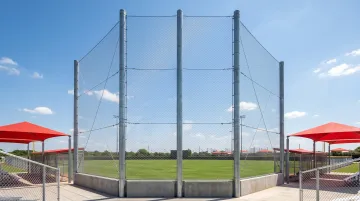
Color choice affects longevity. Carbon black pigment is an effective UV blocker, which is why black netting consistently outperforms white or light-colored materials in outdoor conditions.
Use Cases: Outdoor Net Materials in Practice
Material selection maps directly to outdoor applications:
- HDPE: Baseball backstops, soccer goal nets, lacrosse barriers, outdoor batting cage tunnels
- Polyester: Tennis court surrounds, recreational barrier netting, budget-conscious installations
- Treated nylon: Professional-grade outdoor batting tunnels, football backstops, multi-sport complexes prioritizing longevity over cost
The Windscreen Factory carries DuPont 66-728 twisted-knotted nylon netting with UV protection and weather treatment for outdoor installations, in gauges from #21 through #96 across sport-specific mesh sizes.
How to Choose the Right Net Material for Your Facility
Five factors should guide your material selection:
- Sport type and impact force
- Indoor vs. outdoor environment
- Local climate, particularly rain and humidity levels
- Usage intensity (recreational, commercial, or professional)
- Budget relative to expected lifespan
Situational recommendations:
- Choose nylon for indoor high-impact applications: batting cages, training academies, multipurpose athletic facilities
- Choose HDPE for outdoor installations in any climate—it delivers the longest lifespan and lowest total cost of ownership outdoors
- Choose treated nylon (latex or varnish dip) when maximum longevity is required outdoors or in rainy climates
- Choose polyester for budget-conscious, low-to-moderate-impact outdoor use like tennis courts or recreational barriers
One mistake worth avoiding: untreated nylon used outdoors in humid or rainy conditions can lose break strength rapidly, leading to early net failure, safety hazards, and unplanned replacement costs that wipe out any initial savings.
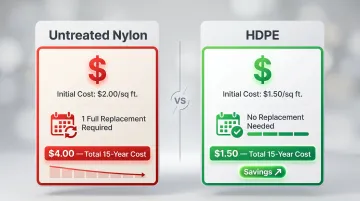
A 15-year cost comparison shows the gap clearly:
| Material | Initial Cost (per sq ft) | Replacement Needed? | 15-Year Total |
|---|---|---|---|
| Nylon (outdoor, untreated) | ~$2.00 | Yes (1 full replacement) | ~$4.00 |
| HDPE (outdoor) | ~$1.50 | No | ~$1.50 |
For schools, parks departments, sports complexes, and multi-sport venues, working with a specialist who can configure net material, gauge, mesh size, and mounting system together leads to better outcomes than selecting components independently. The Windscreen Factory offers custom netting design and configuration tailored to each facility's specific sport, exposure environment, and performance requirements—ensuring the material selected matches the actual installation conditions.
Real-World Application: Getting Net Selection Right
A community sports complex initially installs lower-cost outdoor netting without considering UV resistance or moisture exposure. Within two seasons, holes develop in high-impact zones, visible fraying appears from sun exposure, and sections fail structurally under heavy use. The athletic director faces safety concerns, unplanned budget requests, and facility downtime during peak season.
The corrective path involves switching to HDPE for outdoor field nets and treated nylon for indoor batting tunnels, combined with appropriate twine gauge matching the intensity of use. The results speak for themselves:
- Maintenance burden drops significantly over the life of the installation
- Replacement cycles extend from 2-3 years to 10-15 years
- Player safety improves—the metric administrators care about most
For new installations or worn-out netting that needs replacing, The Windscreen Factory handles material selection, custom fabrication, and professional installation—and provides Photoshop renderings so facility managers can see the finished configuration before work begins. Reach them at 888-619-2228 or sales@thewindscreenfactory.com.
Conclusion
There is no single best sports net material—the right choice is defined by where the net will be installed, what sport it will serve, how intensely it will be used, and what climate it will face. Indoor facilities benefit from nylon's strength and elasticity; outdoor environments demand UV and moisture resistance, where HDPE leads and treated nylon offers a premium alternative.
Choosing the right material upfront reduces safety incidents, cuts replacement costs, and extends net life across multiple seasons. For facility managers, coaches, and program administrators, it's a straightforward durability-versus-budget decision—one where the right call in year one shows up clearly in the budget by year three. If you're sourcing sports netting for a school, park, or athletic complex, The Windscreen Factory offers custom-configured netting built to match your sport, installation environment, and performance requirements.
Frequently Asked Questions
What is sports netting made of?
Sports netting is primarily made from three materials: nylon (polyamide), HDPE (high-density polyethylene), and polyester. Material choice depends on whether the net is for indoor or outdoor use and what sport it will serve.
What is the best material for outdoor sports netting?
HDPE is the leading outdoor material for its embedded UV inhibitors and water repellency, lasting 10-15 years outdoors. Treated nylon (latex or varnish-dipped) is the premium option for high-use professional facilities requiring maximum impact absorption.
Can nylon netting be used outdoors?
Untreated nylon is not recommended outdoors due to water absorption (up to 2.5% by weight) and UV degradation (20% strength loss annually). Latex or varnish-dipped nylon can be used outdoors effectively, particularly in climates where nets can dry between uses.
What twine gauge should I choose for a batting cage?
Gauge selection depends on use intensity: #21 (194 lbs break strength) for light recreational or family use, #36 (365 lbs) for commercial-grade facilities, and #42-#60+ (435-720 lbs) for professional training academies and high-frequency use environments.
How long does sports netting typically last outdoors?
Lifespan varies by material and usage. Untreated nylon may degrade significantly within 2-3 years outdoors. HDPE can last 10-15 years in outdoor environments.
What is the difference between knotted and knotless sports netting?
Knotted netting suits direct-impact sports because reinforced intersections handle high-stress points. Knotless netting offers cleaner sightlines and uniform mesh, but repairs require visible knots — making it better for low-impact or barrier applications.